
Read about our work.
Agribusiness Academy:
Ecospark Briquettes
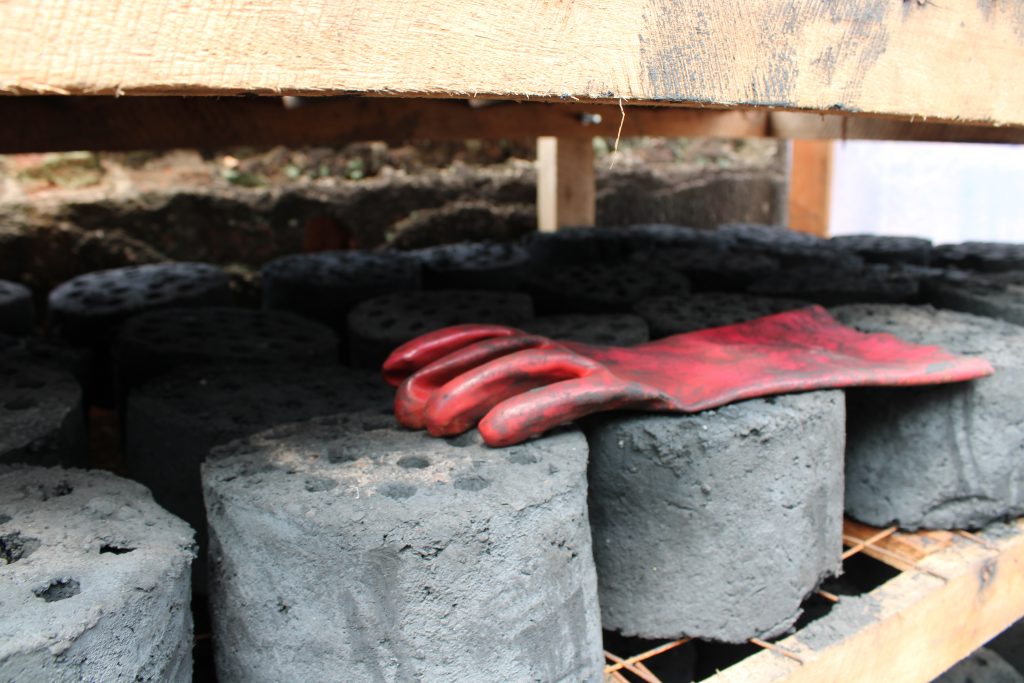
Briquettes in Uganda, used for cooking and heat, are typically created by the long process of mixing carbonized plant waste with a binder, typically cassava flour porridge, which is then molded by hand or with a machine and dried in the sun.
Our Ecospark Briquettes Cluster is a cohort based program that educates individuals on skills, quality, best practices, and ingredient collection. Participants will work to become skilled in the creation, packaging, and sale of environmentally friendly briquettes that make use of agricultural waste and lumber byproducts!
Our participants are given the space and support to develop innovative solutions to issues that effect the agribusiness sector.
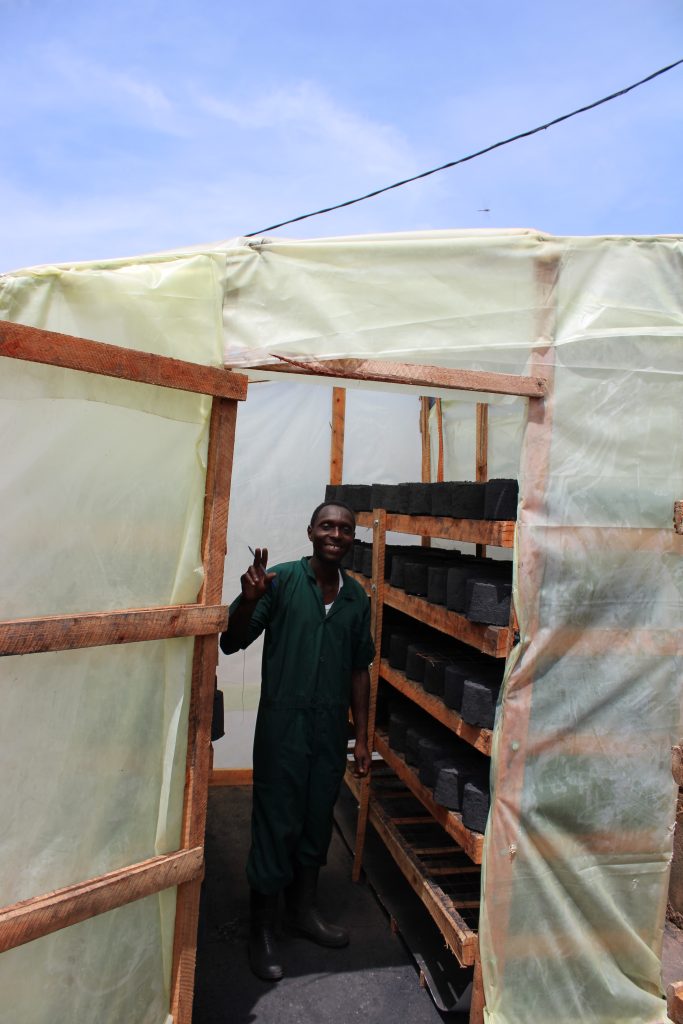
Here is one of our participants standing in a solar dryer that he created to hasten the drying process while preventing the drying briquettes from being affected by rain!
Our briquettes are sold to individuals and companies in the private market at competitive prices, with all profits returning to our participants or being used to improve our production line. Purchasing additional drying racks, molding presses, sifting screens, among other equipment allows for higher quantities of production, faster selling, and an increased number of participants. This means every briquette purchased helps elevate our project, and by extension, the businesses that our participants are running.
Solar Dryers:
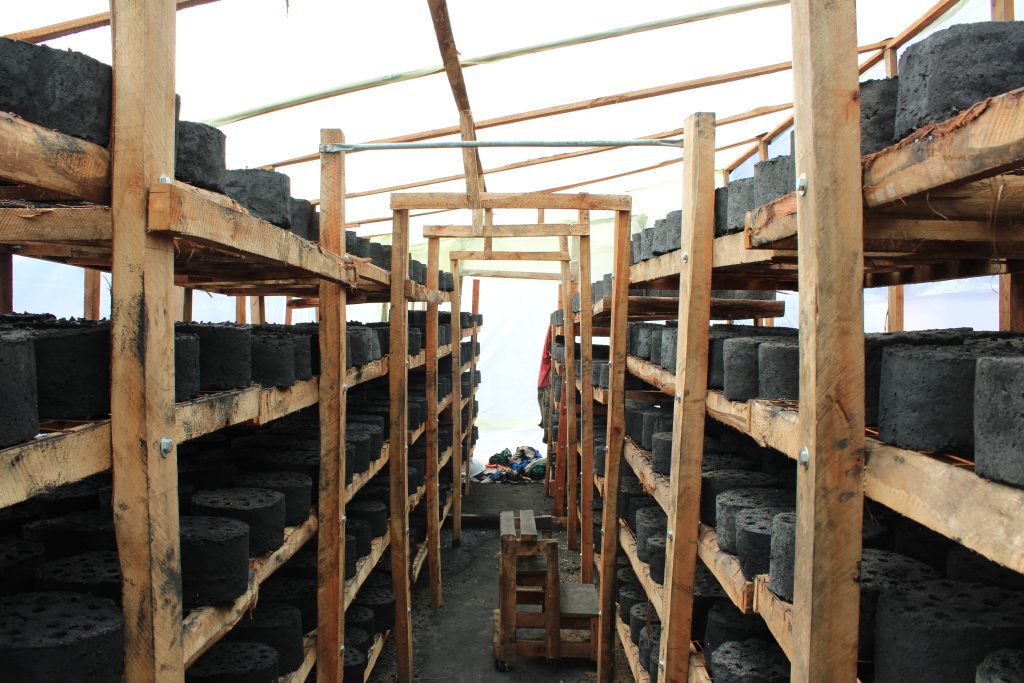
Dry about 800 Briquettes per section
Solar dryers are constructed of simple materials with one goal: Keep the product safe from the environment over the course of the drying process.
One challenge we’ve encountered with them is weather, during the rainier months of the year, less sun means longer dry times. With profit from sales, we plan to purchase gas dryers down the line, but the truth is, they are not cheap. This is not a business one can enter into overnight, which is a lesson we are imparting on all of our participants in the program.
This academy is a part of a project funded by Enabel, the Belgian Agency for International Cooperation: Green and Decent Jobs for Youth.